What is an ISA Certified Arborist?
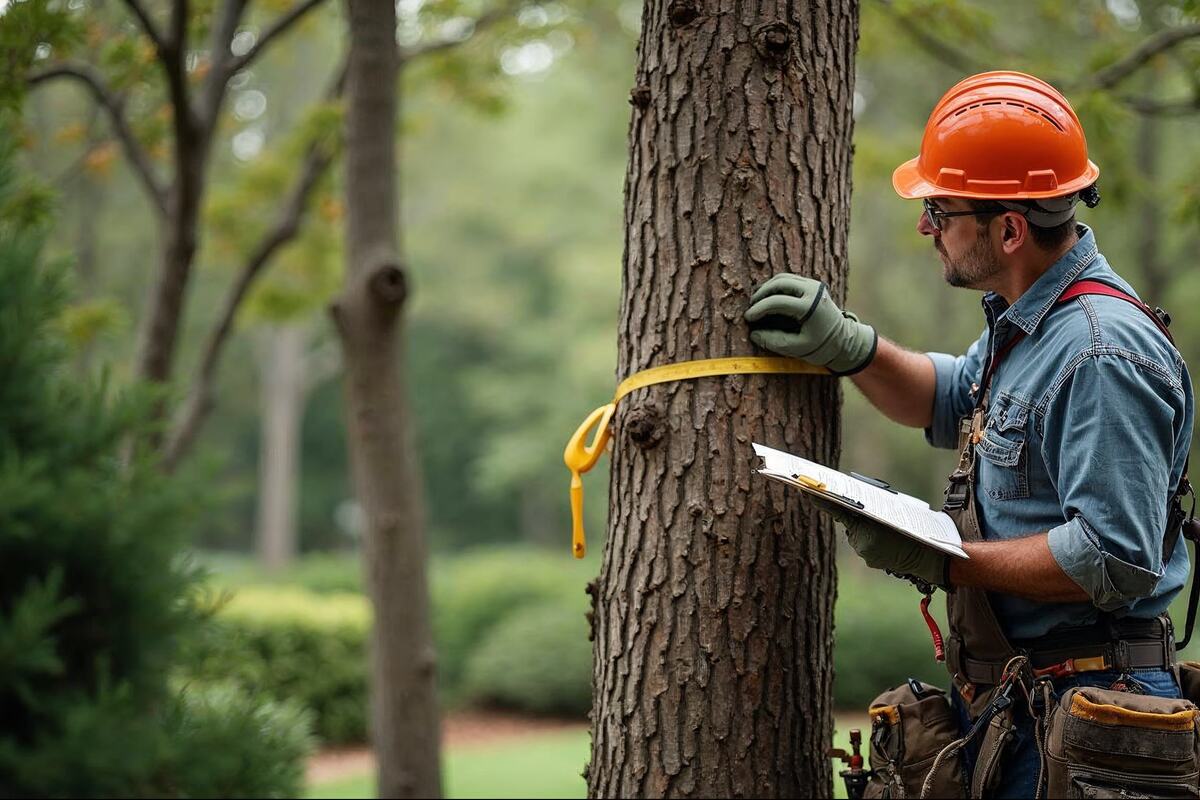
An ISA Certified Arborist has passed the International Society of Arboriculture's exam on tree biology, pruning, diagnosis, soils, safety, and risk after 3 years of full-time experience (or a degree plus less experience), and earns 30 CEUs every 3 years to keep it. It certifies a person's knowledge, not insurance, licensing, or the quality of a company.
"ISA Certified Arborist" is the credential you will see most often on trucks, websites, and business cards, and it is the credential this site records when a professional review is confirmed. It is real and verifiable, with meaningful requirements. It is also narrower than the marketing suggests.
| Credential | Issued by | What it takes | What it means for you |
|---|---|---|---|
| ISA Certified Arborist | International Society of Arboriculture | 3 years of full-time experience (or a degree plus less experience), a proctored exam, 30 CEUs every 3 years | The baseline. The person understands tree biology, pruning, diagnosis, and risk |
| Board Certified Master Arborist | ISA | Years as a Certified Arborist plus a harder, broader exam | Senior-level knowledge; common among consultants and municipal arborists |
| Tree Risk Assessment Qualification (TRAQ) | ISA | A course and exam on a standard method for rating tree risk | The credential to ask for on a formal risk assessment ($300–$1,000+) |
| Registered Consulting Arborist | American Society of Consulting Arborists (ASCA) | Experience, coursework, and peer-reviewed reports | The credential for appraisals, expert reports, and legal disputes |
| State license (where it exists) | State or city government | Varies; some states license tree companies or arborists | Required to operate legally in those places; check separately |
| "Certified" with no issuer named | Nobody, or the company itself | Nothing verifiable | Ask which certification and get the number |
What does it take to become an ISA Certified Arborist?
Two things: experience and an exam. The experience requirement is 3 years of full-time work in arboriculture, which can be reduced with a degree in a related field such as forestry, horticulture, or arboriculture. The exam is proctored and covers tree biology, species identification, soils and water, pruning, planting, diagnosis of pests and diseases, safe work practices, and tree risk. Once certified, the arborist has to earn 30 CEUs every 3 years through courses, conferences, and approved training, or sit the exam again. The certification lapses if they do not.
What does the certification guarantee, and what doesn't it?
It guarantees that the person passed a real test of tree knowledge and has kept current. It does not guarantee anything else. It is not a business license. It is not proof of insurance, and a certified arborist working uninsured puts your house at the same risk as anyone else; ask for the certificate from the insurer. It does not certify climbing or rigging skill, which is a separate craft. And it certifies one person, not the crew of five who show up on the day. Companies that advertise "ISA Certified" are telling you at least one employee holds the credential. Ask which one, and whether that person will be involved in your job.
What other ISA credentials are there?
Above the Certified Arborist level, ISA offers the Board Certified Master Arborist, which requires years of experience as a Certified Arborist and a much broader exam; relatively few arborists hold it, and it is common among consultants, university extension staff, and city foresters. The one most relevant to homeowners is the Tree Risk Assessment Qualification, TRAQ, a course and exam on a standard method for rating the likelihood a tree or limb will fail and what it would hit. If you are paying $300–$1,000+ for a formal risk assessment of a big tree near the house, ask whether the assessor holds TRAQ. Outside ISA, the American Society of Consulting Arborists' Registered Consulting Arborist is the credential for written appraisals, expert reports, and testimony in property disputes and insurance cases. Which one you need for your situation is on when should I call an arborist instead of a removal company?
Who reviews the pages on this site?
Every page on TreeProfessionals.com is written in plain language for homeowners and shows its individual review status. When an ISA Certified Arborist review is confirmed, the reviewer's name, certification number, location, experience, and review date appear on that article. The certification number can be checked in ISA's public directory, and we encourage it. Until those details are confirmed, the article is clearly marked as not yet independently reviewed. Dollar figures across the site come from one shared table of national US ranges, so the same question gets the same answer on every page. Where a page gives a rule of thumb, such as lean beyond about 15 degrees or more than half the canopy dead, the page says that a site visit is the only way to be sure about a specific tree.
Does an ISA Certified Arborist have to be insured or licensed?
No, and this is the gap that catches homeowners. Certification comes from a professional society, not a government, so it carries no legal requirement to hold insurance or a license. Most states do not license arborists at all. A few states and some cities do license tree care companies or require a licensed arborist for certain work, so check your state's contractor or agriculture board. Wherever you live, anyone working on your trees should carry liability and workers' compensation insurance. How to confirm the credential itself, step by step, is on how do I verify an arborist's certification? How the credentialed person differs from the company as a whole is on arborist vs. tree service.
No independently confirmed professional review is on file yet.
Not yet independently reviewed. Figures are typical US ranges for planning purposes, not quotes.