Tree Removal: Cost, Permits, Process & When It's Necessary
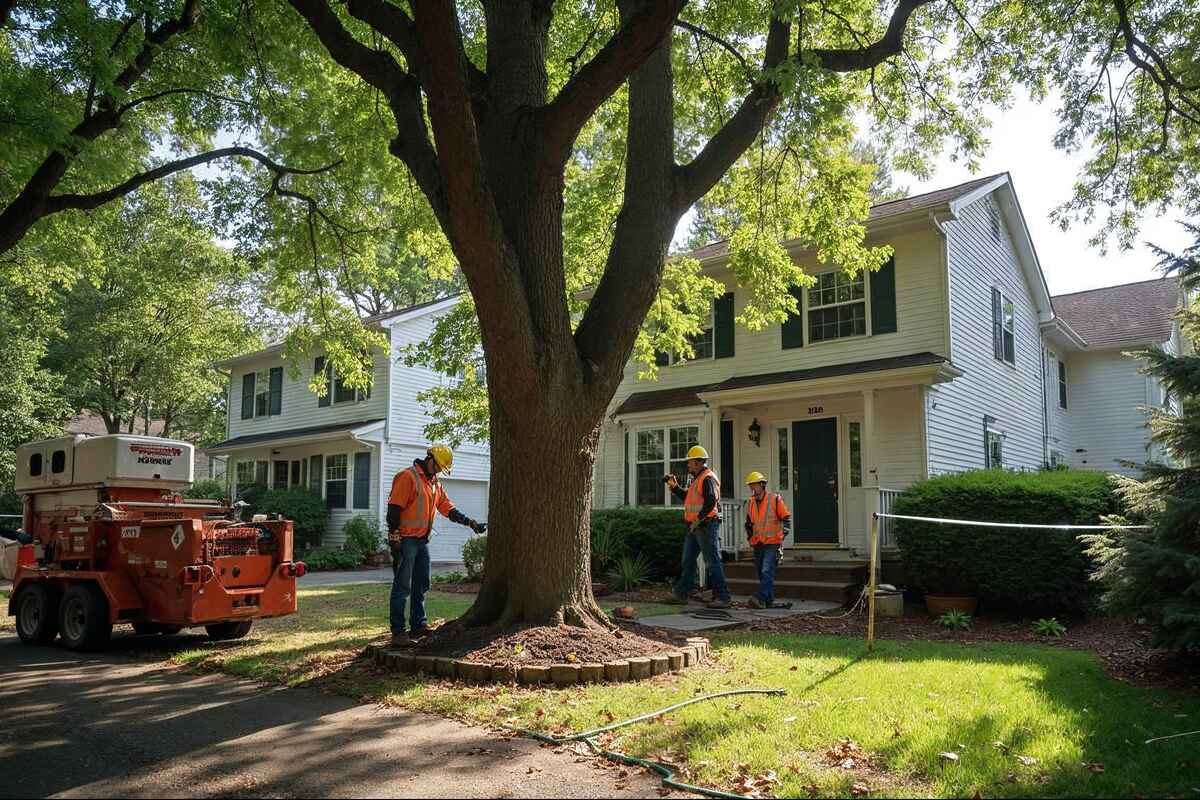
Tree removal means cutting a tree down and hauling it away, usually in sections, by an insured crew. It costs $200–$2,000 in the US, depending mostly on height and access; stump grinding is a separate $100–$400. Many cities require a permit for trunks over 6–12 inches in diameter, so check before you cut.
Whether you say tree removal, tree cutting, or cutting down a tree, it is the same job, and this page is the short version of it. Each question below links to a page that answers it fully, with numbers and a named arborist behind the answer.
Do you actually need removal?
Not every problem tree needs to come down. Here is how to think about it:
- Dead. No leaves in summer, bark falling off, brittle branches, a scratch test that shows brown under the bark. A dead tree should come down before it falls on its own. How do I know if my tree is dead or dying?
- Sick but alive. Some dead limbs, fungus at the base, thinning crown. Sometimes pruning or treatment saves it; sometimes it is on its way out. An arborist visit is worth it before you decide.
- Leaning. A tree that has always leaned is usually fine. A tree that started leaning recently, or has cracked soil or lifted roots on one side, is an emergency. Should I worry about a tree leaning toward my house?
- In the way. Blocking a view, dropping fruit, crowding a foundation. Removal is a choice here, and pruning or root barriers are sometimes cheaper.
What does tree removal cost?
Height and access set the price. These are typical US ranges; get a written, itemized quote from a vetted company for your own tree.
| Tree size | Typical cost |
|---|---|
| Small (under 30 ft) | $200–$500 |
| Medium (30–60 ft) | $500–$1,000 |
| Tall (60–80 ft) | $800–$1,500 |
| Very large (80 ft+) or hazardous | $1,500–$3,000+ |
Stump grinding adds $100–$400. Full breakdown, including what raises the price and what a quote should include: How much does it cost to remove a tree?
How does tree removal work? The process in 5 steps
- Assessment. A pro looks at the tree's height, lean, health, and what is around it: house, lines, fences, neighbors' property. This decides the method and the price.
- Written quote. It should list felling, chipping, haul-away, stump grinding, and cleanup separately, and come with proof of liability and workers' compensation insurance.
- Permit check. Your city may require a permit based on trunk size or species. Most companies will tell you and many will pull it for you. Do I need a permit to remove a tree on my property?
- Takedown. Small trees in open space are cut at the base and dropped. Trees near anything valuable are climbed or reached by bucket truck and taken apart from the top down, with pieces roped or craned to the ground. How do professionals remove a tree close to a house?
- Cleanup. Branches are chipped, the trunk is bucked into logs and hauled or left for you, and the yard is raked. The stump stays unless you paid to grind it. Can I keep the wood? What does removal include? · Stump grinding vs. stump removal
When is tree removal necessary?
Removal is necessary when a tree is dead, more than half its canopy is dying, it has a sudden or worsening lean, the trunk is hollow or cracked, or major roots are lifted out of the ground. It is also the safe call when a large tree is within falling distance of a house and shows any of those signs. A tree that is merely in the way or dropping leaves is a choice, not a safety need, and a good arborist will tell you that.
How long does it take to remove a tree?
A small tree takes an hour or two. A medium tree in an open yard takes half a day. A large tree close to a house can take a full day, and sometimes two if a crane is scheduled. Scheduling is the slow part: in busy season you may wait one to three weeks for a crew, while in winter you can often get someone within days. When is the cheapest time of year to remove a tree?
Can I remove a tree myself?
Only a small one: under 15 ft tall, at least 10 ft from power lines, with a clear place for it to fall and nothing it could hit. Anything taller, anything near a house, and anything near lines is a job for an insured professional. Tree work kills people every year, and most of them are not professionals. Can I remove a tree myself? explains where the line is and how to do the small ones safely.
Every tree removal question we answer
How much does it cost to remove a tree?
Do I need a permit to remove a tree on my property?
Who's responsible when a tree falls — me, my neighbor, or the city?
Does homeowners insurance cover tree removal?
Can I remove a tree myself?
How do I know if my tree is dead or dying?
Should I worry about a tree leaning toward my house?
How do professionals remove a tree close to a house?
When is the cheapest time of year to remove a tree?
Can I keep the wood? What does removal include?
No independently confirmed professional review is on file yet.
Not yet independently reviewed. Figures are typical US ranges for planning purposes, not quotes.