How to Hire a Tree Service: Vetting, Insurance & Red Flags
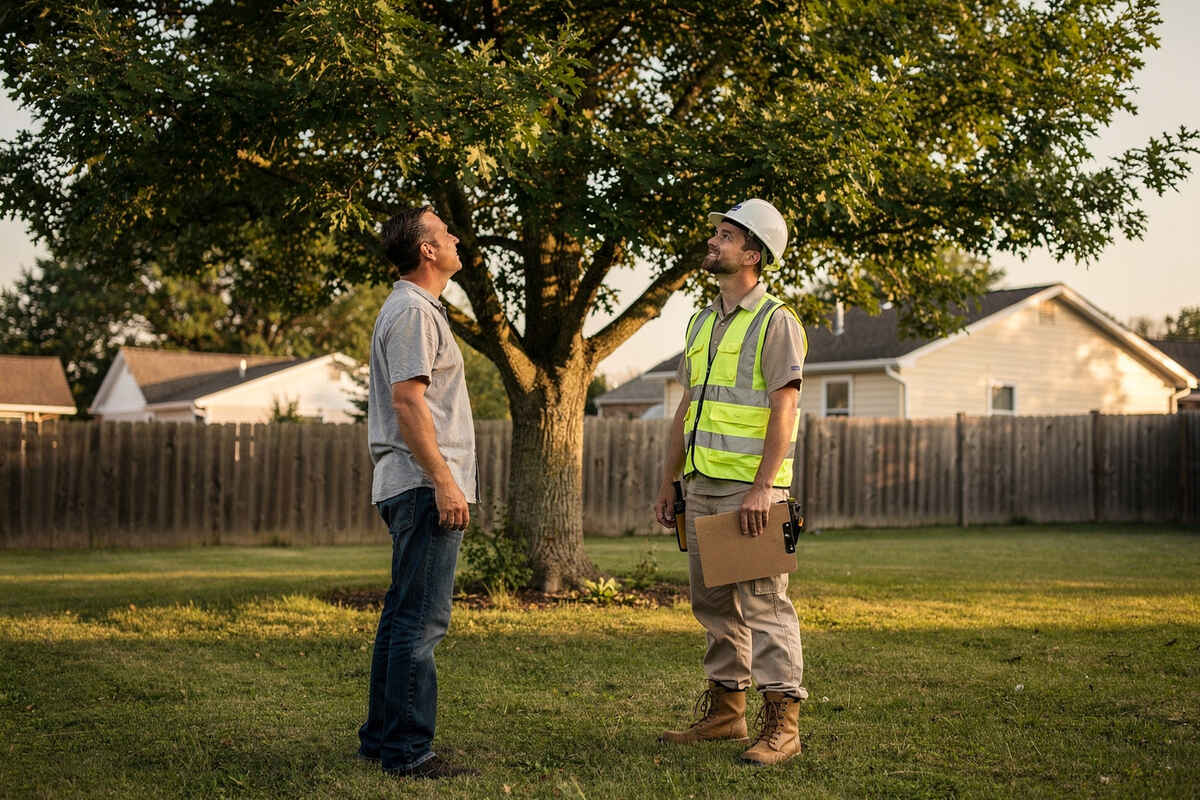
To hire a tree service safely: ask for a certificate of insurance sent by the insurer showing general liability and workers' compensation; choose one reputable, vetted company and get a written, itemized proposal from an in-person visit; pay no more than about a third up front; and walk away from door-knockers, cash-only crews, and anyone offering to top a tree.
In most states there is no license to look up for tree work, a mistake can cost more than your house, and the price for the same tree can vary by hundreds of dollars depending on what a quote leaves out. The vetting is short, though. This page is the overview; each section links to the detailed answer.
Do you need a tree service, or something else?
A tree service is the right call for removing a tree, grinding a stump, or clearing storm damage. If the question is whether a tree is sick, can be saved, or how to prune it without harm, you want an ISA Certified Arborist; arborist vs. tree service sorts out which you need. If a limb is within 10 ft of a power line, the utility handles that part. For a small branch you can reach from the ground, you may not need anyone at all.
| Step | What to do | The number to know |
|---|---|---|
| Vet the company | Insurance certificate, address, license where one exists, ISA credential, references | About 10 minutes per company |
| Confirm insurance | Certificate sent by the agent: general liability and workers' compensation | Commonly $1,000,000 per occurrence |
| Get a proposal | Written, itemized, from an in-person visit | One clear proposal |
| Know the going rate | Removal by size; stump separate; hourly for open-ended work | $200–$2,000 removal; $100–$400 stump; $150–$300 per hour |
| Ask the questions | Scope, stump, wood, permit, lawn protection, deposit, timing, references | 12 questions |
| Pay safely | Check or card, balance on completion | No more than about a third up front |
| Watch the flags | Door-knockers, cash only, no COI, no written quote, pressure, topping | Any of the first four is a deal-breaker |
How to hire a tree service, in order
- Find one strong candidate. Referrals, the ISA directory, local reviews. Not the flyer on the door.
- Vet the company. Search the name and address, check any license or credential claimed, call a reference. How do I know a tree company is legit?
- Confirm the insurance. General liability and workers' compensation, current, sent directly by the agent. Why must a tree service be insured?
- Get a written proposal in person. Felling, chipping, haul-away, stump, cleanup, permit, crane, each priced or marked included. What should the paperwork look like?
- Ask the questions. Who does the work, what protects the lawn, is the price fixed, what deposit. What questions should I ask?
- Confirm the scope, then hire. Every item priced or marked included, pay by check or card, and hold the balance until the yard matches the paper.
What should I look for when hiring a tree service?
Insurance first, because it is the one thing you cannot fix after an accident. Then a physical address and a phone that is answered. Then a written quote that itemizes the job. Then references or reviews from jobs like yours. Most states do not license tree work specifically, though some require a contractor's license above a job value; check your state board. For pruning, add an ISA Certified Arborist on staff. The whole vetting takes about 10 minutes per company.
How much should a tree service cost?
Removal runs $200–$2,000 for most trees, driven mostly by height and what it could hit; the breakdown by size is on how much does it cost to remove a tree? Stump grinding is almost always a separate $100–$400. Crews bill $150–$300 per hour when they price hourly; what tree services charge per hour explains where that money goes. Get one itemized proposal from a vetted company and read it line by line; a price far below these ranges is usually missing something you will pay for later, most often the stump or the haul-away that what tree removal includes walks through.
Do I need an arborist or a tree service?
For taking down a dead, fallen, or unwanted tree, a vetted, insured tree service is enough; the craft is in the rigging and the cleanup. For a tree you want to keep, pruning, diagnosis, or judging a lean, the credential matters, because bad pruning cannot be undone. Many tree services have an ISA Certified Arborist on staff; ask who is certified and whether that person will be on site.
What is the biggest mistake homeowners make hiring tree work?
Two, usually together. Hiring on price alone without asking what the proposal leaves out, then paying $100–$400 for the stump it never mentioned. And skipping the insurance check because the company seemed nice, then inheriting the claim when a worker is hurt or a limb goes through the neighbor's roof. Both are avoided by the same habit: paperwork before people. If a company resists either, the red flags list tells you why. And if the crew earns it, a tip is welcome but never expected.
Every hiring question we answer
How do I know a tree company is legit?
Why must a tree service be insured, and what happens if they're not?
What do tree services charge per hour, and why so expensive?
What questions should I ask before hiring a tree service?
Do you tip tree removal crews?
What are the red flags of a bad tree service?
No independently confirmed professional review is on file yet.
Not yet independently reviewed. General information, not legal or insurance advice. Figures are typical US ranges for planning purposes, not quotes.