Tree Fell on Your House? What to Do, Who Pays, Who to Call
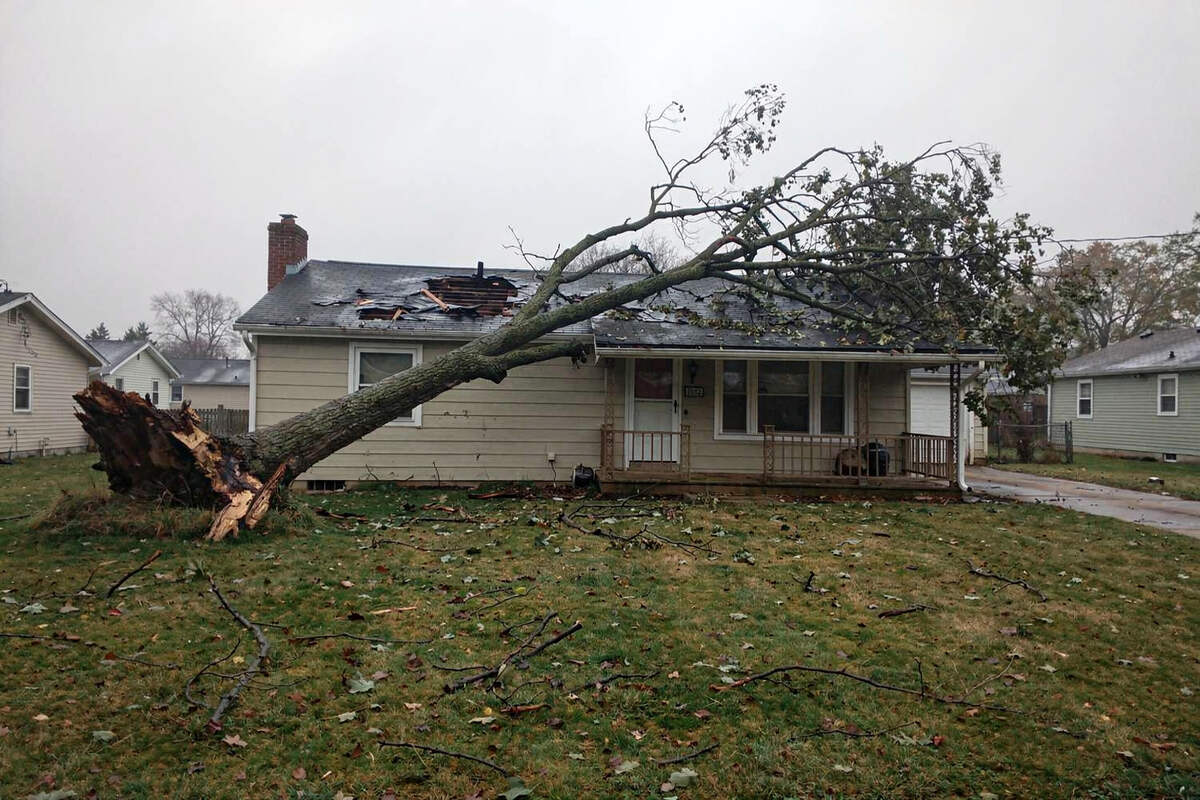
Tree on the house: get everyone out, check for gas or downed lines, call 911 if in doubt, photograph everything, call your insurer, tarp the roof, then hire an insured crew. Insurance covers removal up to $500–$1,000 per tree if it hit a structure; emergency removal with a crane runs $1,500–$5,000. A tree on lines is the utility's job.
Storm damage means dealing with a tree service under pressure, often at night, with a hole in the roof and a stranger at the door offering to fix it for cash. This page is the map: what is an emergency, who pays, who to call, and how to avoid the crews that follow the weather.
Is this an emergency, or can it wait?
A tree is an emergency if it is on a structure, on a power line, blocking your only way out, or hanging over any of those. A tree lying in the yard is a mess, not an emergency, and emergency work costs roughly 1.5×–2× the normal price, so if the tree hit nothing and is stable, call nobody tonight and line up a vetted company next week. If it is on the house, follow a tree fell on my house, what do I do first? If there is a wire anywhere in it, stay at least 10 ft away and read who removes a tree on power lines? before anything else.
| Situation | Call first | Who pays | Typical cost to you |
|---|---|---|---|
| Tree on your house or garage | 911 if gas or lines; then insurer | Your homeowners policy | Deductible plus removal above the $500–$1,000 per tree cap |
| Tree in the yard, hit nothing | Tree service, next week | You | $200–$500 for a medium tree |
| Neighbor's tree on your property | Your insurer | You, unless they knew it was hazardous | Your deductible |
| Tree on power lines | Utility or 911 | Utility clears the line | Only the remains after the line is clear |
| Tree in the road | 911 if blocking; else city, county, or state DOT | Road owner opens the road | Only the remains on your lot |
What to do, in order
- People out, away from the tree. Trees on roofs shift.
- Check for gas and lines. Either one means 911 from outside. Treat every line as live.
- Photograph everything before it is touched, including the base of the tree.
- Call your insurer if a structure was hit.
- Tarp or board up. Typically $200–$1,000, reimbursed as damage prevention.
- Hire an insured crew. Written quote, proof of insurance, no assignment of benefits.
- Repair, then submit receipts to your insurer.
Is a tree on my house an emergency?
Yes, and it is the one case where paying emergency rates is right, because every hour of rain through the roof adds to the repair. A tree on a house usually needs a crane, which adds $500–$1,500, and an emergency crew, which is why the all-in figure is $1,500–$5,000. A tree in the yard costs the same next week as tonight, minus the surcharge. Details are on how much does emergency tree removal cost, and why more?
Who pays when a storm brings a tree down?
The rule is "only if it hit something." A tree on your house, garage, fence, or shed is a homeowners claim: the repair, and removal up to $500–$1,000 per tree, after your deductible. In wind and hurricane zones that deductible may be 1%–5% of the dwelling coverage rather than a flat $500–$2,500. A tree on your car is an auto comprehensive claim. A tree that hit nothing is your cost, $200–$500 for a fallen medium tree. A neighbor's tree follows the act-of-God rule: your policy pays unless they knew it was dead or dangerous. Details are on does insurance cover storm tree damage? and whose insurance pays when a neighbor's tree falls on my property?, which match does homeowners insurance cover tree removal?
Who do I call for a tree on power lines or in the road?
Lines: the utility, or 911 if a line is down on the ground, a car, or a person. The utility clears the line at no charge and leaves the rest of the tree to you. Roads: 911 if the tree blocks traffic or has wires in it, otherwise the city, county, or state DOT depending on who owns the road. The crew cuts at the curb; the remains on your lot are yours. Strip trees between sidewalk and street are usually the city's, and city claim deadlines run 30 to 180 days. See who's responsible for a tree down in the road?
Will FEMA pay for my tree cleanup?
Almost never for a tree in the yard. FEMA Individual Assistance exists only after a federal disaster declaration for your county and pays for essential repairs insurance did not cover. For most homeowners the real government help is free curbside debris pickup and a low-interest SBA loan. Details are on can I get FEMA or government help with storm tree cleanup? And do not hire the crew that knocks first; see how do I avoid tree removal scams after a storm?
Every storm damage question we answer
A tree fell on my house — what do I do first?
Does insurance cover storm tree damage — house, car, fence?
Whose insurance pays when a neighbor's tree falls on my property?
How much does emergency tree removal cost, and why more?
Who removes a tree on power lines?
Who's responsible for a tree down in the road?
Can I get FEMA or government help with storm tree cleanup?
How do I avoid tree removal scams after a storm?
No independently confirmed professional review is on file yet.
Not yet independently reviewed. Insurance and liability rules vary by state and policy. This page is general information, not legal or insurance advice.