Homeowner's Tree Care Guide: Health, Watering, Diseases & Warning Signs
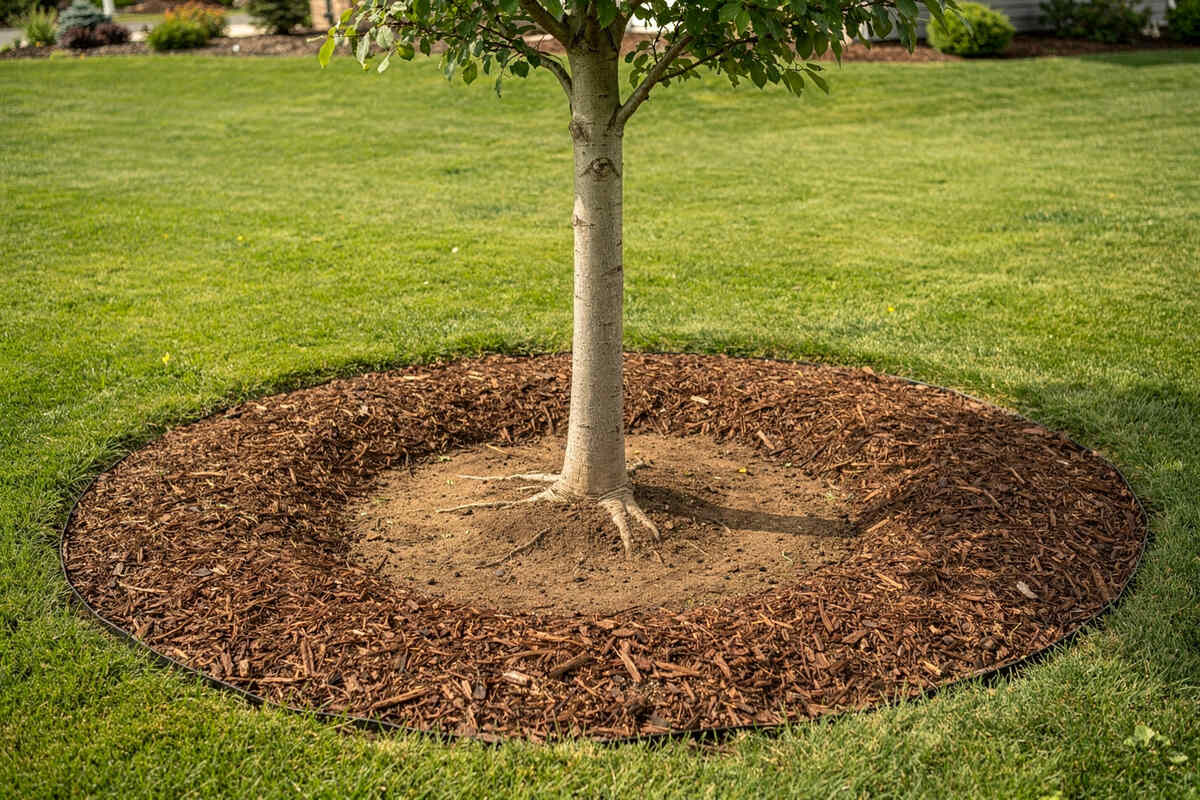
Most established yard trees need little: deep watering in drought (about 1 inch of water per week), a 2–4 inch mulch ring kept 3–6 inches off the trunk, and no fertilizer unless a soil test or symptoms say so. New trees need about 10 gallons per inch of trunk diameter per week for 1–2 years.
The usual way homeowners hurt trees is by doing too much: mulch against the trunk, fertilizer on a schedule, daily sprinklers, a string trimmer into the bark. This guide covers the few things that matter. If your real question is whether the tree is already dying, start with how do I know if my tree is dead or dying?
Does your tree need anything right now?
Check four things. The base: mulch or soil against the trunk needs pulling back; see how do I mulch a tree properly? The ground: mushrooms from the roots or shelf fungus on the trunk mean decay; see mushrooms or fungus on my tree or roots. The canopy: full, or thin and browning from the top? The weather: after two or three dry weeks, the tree needs water, however old it is.
| Task | Newly planted (first 1–2 years) | Established tree | Skip it |
|---|---|---|---|
| Watering | About 10 gallons per inch of trunk diameter per week | About 1 inch of water per week in drought | Daily lawn-sprinkler watering |
| Mulch | 2–4 inches deep, 3–6 inches off the trunk, at least 3 ft across | Same; out to the drip line if you can | Mulch volcanoes; landscape fabric |
| Fertilizer | None the first year | Usually not needed unless a soil test or symptoms say so | Feeding on a schedule; feeding a stressed tree |
| Pruning | Structural pruning every 1–2 years for the first 5–10 years | Deadwood as needed; never more than 25% of live crown in a year | Topping; wound paint; pruning oaks April–July in oak wilt regions |
| Roots | Keep traffic off the root zone | No grade changes, trenching, or parking inside the drip line | Root pruning without an arborist |
The yearly tree care routine, in order
- Early spring: pull mulch back from the trunk, top the ring up to 2–4 inches, look for fungus at the base and cracks in the trunk. Plant now or wait for fall; see how and when should I plant a tree?
- Late spring: compare leaf-out to last year. Thin leaves on one side, or leaves that brown and drop early, point to roots or disease; check the common tree diseases table.
- Summer: water deeply in any dry spell of two or three weeks; new trees every week. See how much should I water my trees?
- Fall: the best planting season. Water evergreens before the ground freezes. No fertilizer unless a soil test calls for it; see do trees need fertilizer?
- Winter: the best time to prune most species and to see deadwood, crossing limbs, and cracks without leaves in the way.
What does a healthy tree actually need from me?
Water when it is dry, a mulch ring instead of turf at the base, and protection from what hurts roots and bark: mowers, string trimmers, parked cars, piled soil, and trenches. Roots typically extend 1–3 times the canopy radius in the top 12–18 inches of soil, so most of what a tree needs is decided by what happens to the lawn around it. An established tree in a fertilized lawn does not need its own fertilizer. A young tree benefits from structural pruning every 1–2 years for the first 5–10 years, covered in how do I prune a young tree?
How do I know if my tree is dying?
Scratch a pencil-thin twig with a thumbnail. Green underneath means alive; brown and dry means that branch is dead, and you test several to judge the tree. The other reliable signs are no leaves in summer, bark peeling in sheets, fungus at the base, and more than half the canopy dead. A thin canopy with green twigs is stress, not death. The full table is on how do I know if my tree is dead or dying? If the tree still has a chance, can pruning save a dying tree? explains what pruning can fix.
When should I call an arborist instead of handling it myself?
When the problem is below ground or inside the trunk, where you cannot see it or fix it with a hose. Fungus at the base or trunk, a sudden lean, large limbs dying from the tips, cracks, cavities, and roots heaving near the house all qualify. A basic arborist visit runs $75–$150 against $200–$2,000 to remove a tree. The guide to when to call an arborist covers specifics; are tree roots damaging my foundation? covers the most common reason people call.
What tree care is a waste of money?
Most of what is sold as routine tree care: annual fertilizing of a mature tree, deep-root feeding without a soil test, wound sealant on pruning cuts, mulch volcanoes, and blanket sprays for pests nobody has identified. None help a healthy tree and several hurt it. A soil test costs $15–$30 through a state extension lab and settles the fertilizer question for years. Spend the savings on deep watering in a drought year, the single most useful thing a homeowner can do for a tree.
Every tree care question we answer
Is my tree dying? Signs and what to do
How much should I water my trees — new vs. established?
Mushrooms or fungus on my tree or roots — is that bad?
What are the most common tree diseases in the US?
Are tree roots damaging my foundation or pipes?
How do I mulch a tree properly?
How and when should I plant a tree?
Do trees need fertilizer?
No independently confirmed professional review is on file yet.
Not yet independently reviewed. Figures are typical US ranges for planning purposes, not quotes.