Tree Trimming: Cost, Timing & When to Call a Pro
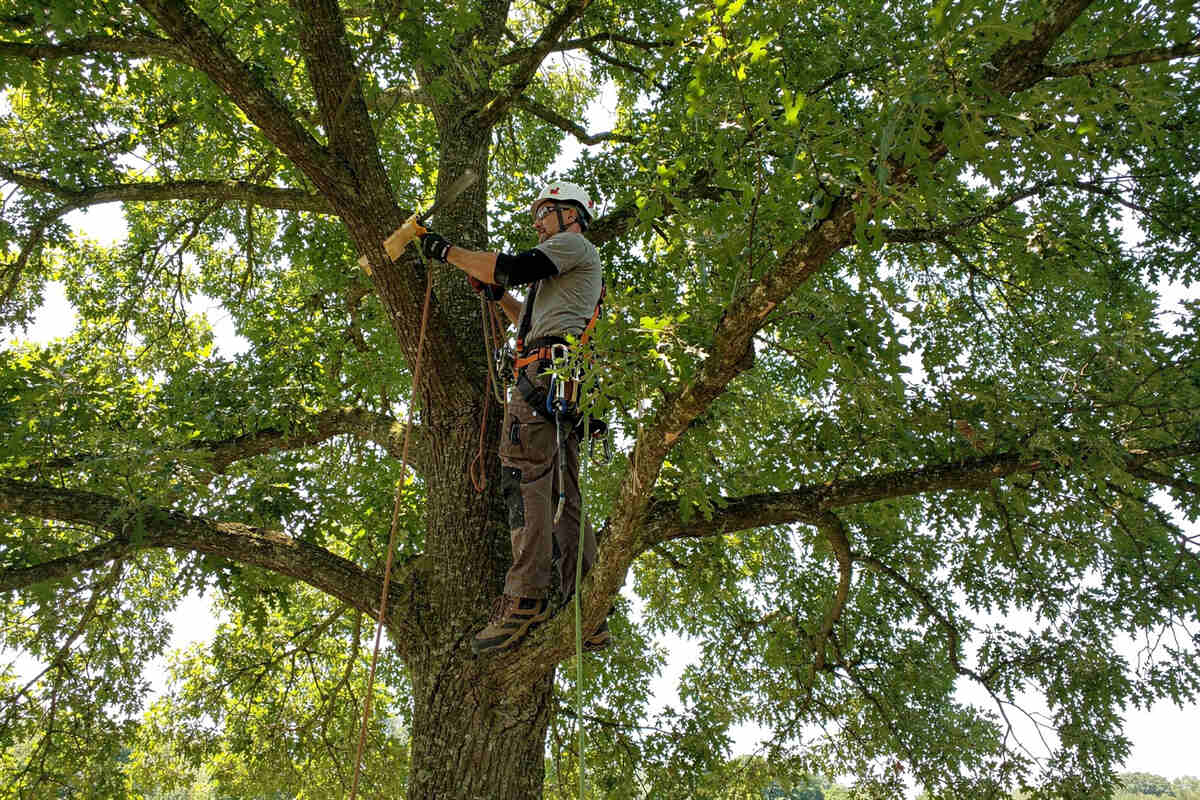
Tree trimming costs $75–$1,500 per tree: $75–$450 for trees under 30 ft, $150–$875 for 30–60 ft, and $300–$1,500+ above that. Late winter is the default time, every 3–5 years for mature shade trees. Homeowners can cut branches under about 2 inches from the ground; ladders, saws, and anything near power lines are a pro's job.
Trimming is the most common tree job in the US and the one homeowners most often overpay for, or skip until a limb lands on the roof. This page gives the prices, the calendar, and the line between a Saturday chore and a job for a crew with ropes. Arborists separate pruning (cuts for the tree's health) from trimming (cuts for shape and clearance); what's the difference between pruning and trimming? explains it, and for cost and timing the two are treated the same.
Does your tree actually need trimming?
Not every tree needs a visit on a schedule. A healthy mature shade tree can go 3–5 years between trims. The signs that it is time: dead or hanging limbs, branches rubbing the roof, branches within 10 ft of a power line, a canopy so dense the lawn under it has died, or crossing branches rubbing bark off each other. Young trees and fruit trees need light shaping every 1–3 years to build a strong frame. If nothing on that list applies, save the money.
Trimming cost, timing, and DIY limits at a glance
| Question | Short answer | Details |
|---|---|---|
| Cost, small tree (under 30 ft) | $75–$450 | Cost page |
| Cost, medium tree (30–60 ft) | $150–$875 | Bucket truck or climbing usually needed |
| Cost, large tree (60 ft+) | $300–$1,500+ | Climbing crew, sometimes a crane |
| Hourly crew rate | $150–$300 per hour | Two- or three-person crew with a chipper |
| Best time of year | Late winter (dormant) | Timing page |
| How often, mature shade trees | Every 3–5 years | Young and fruit trees every 1–3 years |
| Most to remove in one season | 25% of the live canopy | Over-trimming page |
| DIY limit | Branches under about 2 inches, from the ground | Pole tools reach about 12–15 ft |
| Power line rule | Never within 10 ft | Who trims near lines |
How to get a trim done right
- Decide what the trim is for. Roof clearance, dead limbs, thinning for light, or shaping. A crew that knows the goal quotes accurately.
- Check the season. Dormant season for most trees; after bloom for spring flowers; not April–July for oaks in oak wilt regions.
- Get a quote that describes the cuts. Number of limbs, clearance target, and whether debris hauling is included.
- Say no to topping. Any quote to cut the top off a tree to make it shorter is a quote to decline.
- Confirm insurance and line-clearance qualifications if any branch is near a power line.
How much does tree trimming cost?
$75–$1,500 per tree, and the biggest driver by far is height. Small trees under 30 ft can usually be trimmed from the ground or a short ladder and run $75–$450. Medium trees, 30–60 ft, need a bucket truck or a climber and run $150–$875. Large trees over 60 ft run $300–$1,500+, more if a crane is needed over a house. Crews charge $150–$300 per hour, and several trees on one visit usually come 10–20% less per tree. The full breakdown, including what raises the price, is on how much does tree trimming cost?, and is it cheaper to trim a tree or remove it? covers the point where trimming stops making sense.
When is the best time to trim trees?
Late winter, after the hardest cold and before buds open. The tree is dormant, the structure is visible, wounds close quickly once growth starts, and pests are inactive. Crews are less busy and some offer a 10–20% winter discount. The exceptions matter: trim spring-flowering trees right after they bloom or you lose next year's flowers; do not cut oaks in April–July where oak wilt is present; and expect maples and birches to drip sap from late-winter cuts, which looks alarming but does not hurt them. Dead, broken, or hanging limbs come off whenever you find them. Details are on what time of year should trees be trimmed?
Can I trim my own trees?
Yes, within limits. Branches under about 2 inches across that you can reach from the ground with loppers, a hand saw, or a pole saw are a reasonable homeowner job; pole tools reach about 12–15 ft. Beyond that the risk climbs fast. Do not run a saw from a ladder, do not trim any tree over 15 ft yourself, do not touch any branch within 10 ft of a power line, and do not cut a large limb that hangs over a roof, a car, or a fence. Those are the jobs that put homeowners in emergency rooms. Can I trim my own trees? covers the three-cut method and the tools, and can I trim my neighbor's branches? covers the branches that cross the property line. Whatever you cut, never take more than 25% of the live canopy in a season and never let anyone top a tree; can trimming too much kill a tree? explains why.
Every trimming question we answer
How much does tree trimming cost?
What time of year should trees be trimmed, and how often?
Can I trim my neighbor's branches hanging over my property?
Who trims trees near power lines: me, the city, or the utility?
Can trimming too much kill a tree?
Can I trim my own trees?
Is it cheaper to trim a tree or remove it?
No independently confirmed professional review is on file yet.
Not yet independently reviewed. Figures are typical US ranges for planning purposes, not quotes.