Tree Pruning Guide: Timing by Species, Techniques & Mistakes
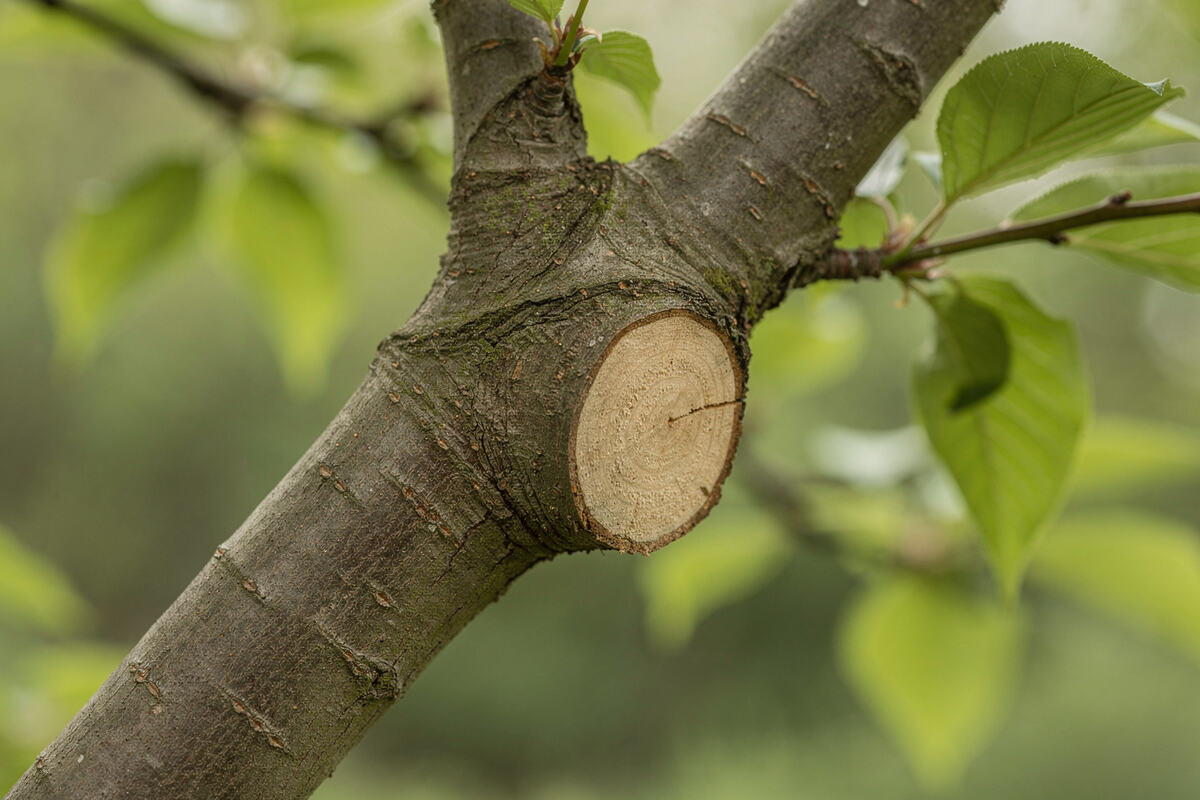
Pruning is cutting for health and structure, not looks. Most trees are best pruned in late winter while dormant; spring bloomers right after flowering; stone fruit in dry summer weather; oaks never April–July where oak wilt exists. Remove no more than 25% of the live crown in a season, 10–15% on mature trees, and never top a tree.
Most bad pruning is a timing problem or a quantity problem: the right cut in the wrong month, or too many cuts in one afternoon. This guide answers the questions homeowners ask and links to the detailed page for each. Cost, roof clearance, and a neighbor's branches belong to our tree trimming guide; the difference is worth two minutes.
Does your tree need pruning?
Look for dead or bare branches, broken limbs, two stems competing to be the trunk, branches rubbing each other, growth heading into the house or a wire, and clusters of thin upright watersprouts from a past bad cut. Any of those is a reason to prune. A full, evenly shaped tree with none of them does not need a cut this year. Young trees are the exception: they need light structural pruning every 1–2 years for the first 5–10 years.
| Question | Short answer | Detail page |
|---|---|---|
| Best time for most trees | Late winter, while dormant, before buds swell | Why prune in winter? |
| Oaks | Dormant season only; never April–July where oak wilt exists | Timing by species |
| Spring bloomers (dogwood, lilac, magnolia) | Right after the flowers fade | Timing by species |
| Stone fruit (cherry, peach, plum) | Summer, in dry weather | Timing by species |
| How much to remove | Never more than 25% of live crown in a season; 10–15% on mature trees | How much can you prune? |
| Wound paint or sealer | No, except oaks in oak-wilt regions and a few fruit-tree cases | Should you seal a cut? |
| Topping | Never; it causes decay and weak regrowth | Why topping is bad |
| Young trees | One leader, spaced scaffolds, small cuts, every 1–2 years | Pruning a young tree |
| Dying tree | Pruning removes dead wood but cannot fix roots | Can pruning save it? |
How to decide what to do, in order
- Identify the tree and pick the season. Default to late winter; after bloom for spring flowerers, summer for stone fruit, late spring for pines. Check the species table.
- Start with dead, damaged, and diseased wood. It can come off any time of year. Then see whether anything else is needed.
- Set a budget of cuts. Count what you plan to remove against the 25% ceiling. If the tree needs more, split it over two or three years.
- Cut at the collar, no sealer. Just outside the swollen base of the branch, not flush, no stub. Leave the wound open.
- Call a pro for anything overhead. Prices are on our trimming cost page.
Do I need to prune my tree at all?
Not necessarily. Forest trees are never pruned and do fine. A mature tree with no dead wood, sound structure, and nothing growing toward a target can go years between visits; mature shade trees are typically looked at every 3–5 years. Every cut is a wound, and a tree cut hard every year for no reason ends up with weak, crowded regrowth. If you are unsure, an arborist visit is cheaper than the wrong pruning job.
What is the best month to prune trees?
February or March across most of the US, after the deepest cold and before buds open. The tree is dormant, the structure is visible, most insects and fungal spores are inactive, and cuts start closing as soon as spring growth begins. The exceptions are species-specific: prune spring-flowering trees right after bloom or you lose next year's flowers, prune stone fruit in dry summer weather to avoid silver leaf and canker, pinch pines at the candle stage in late spring, and keep oaks in oak-wilt regions strictly dormant-season. The reasons are on why prune in winter?
Can I prune a tree myself?
For small work, yes. Branches under about 2 inches thick that you can reach from the ground with hand pruners, loppers, or a pole saw are within reach of a careful homeowner, and that covers most structural pruning on a young tree. Anything that needs a ladder with a saw in hand, a chainsaw above shoulder level, a limb heavy enough to tear bark as it falls, or any branch within 10 ft of a power line is professional work. Our trimming guide covers the tools and safety limits.
How much does tree pruning cost?
Pruning is priced the same way as trimming: by tree height, access, and how much wood comes down. Nationally that is about $75–$1,500 per tree, with a typical residential visit in the low hundreds. There is no separate "pruning rate"; a certified arborist may charge more per hour but usually removes less wood. The breakdown by tree size is on how much does tree trimming cost? Get a written quote from a vetted company and ask what they plan to remove and why.
Every pruning question we answer
Pruning vs. trimming — what's the difference?
When to prune oak, maple, fruit trees, and other common trees?
How much of a tree can you prune without harming it?
Why prune in winter or during dormancy?
Should you seal a cut branch?
What is tree topping and why is it bad?
How do you prune a young tree so it grows well?
Can pruning save a dying tree?
No independently confirmed professional review is on file yet.
Not yet independently reviewed. Figures are typical US ranges for planning purposes, not quotes.